


In Sweden, we paint eggs, and a person dressed as a rabbit gives away candy to children. In Andalusia, it’s a whole other ballgame. We didn’t know what to expect when we flew out to take part in the easter experience in Jerez – and boy, we were in for a treat. The whole town transforms into a celebration deeply rooted in tradition.
Estimated reading time: 15 minutes
Table of Contents
First Impressions of Easter in Jerez
We arrived in Jerez not entirely sure what to expect, only that Semana Santa was something deeply rooted in Andalusian culture. Within hours, the atmosphere made it clear this wasn’t just another festival—it felt like the entire city was holding its breath. The streets were fuller, yet quieter in a strange way. There was a sense of anticipation in the air, like something meaningful was about to unfold at any moment.
Orange blossoms scented the air, church bells echoed through narrow streets, and people—locals and visitors alike—seemed to move with purpose, as if guided by tradition. Coming from Sweden, where easter is celebrated in a totally different way, we didn’t really know what to expect other than the knowledge that it would be something completely new. And it really was. Semana Santa (Easter) is celebrated like there’s no tomorrow.


What Makes Semana Santa in Jerez So Special?
Andalusia is one of the most popular places in the world for celebrating easter. Most focus tends to go to Sevilla, but Jerez de la Frontera offers a really good easter. Jerez has something different. It feels more intimate, less overwhelming, and somehow more personal. The processions aren’t just performances – they feel like expressions of collective memory and devotion.
There’s probably less rush, fewer crowds competing for space, and more room to simply observe compared to Sevilla. It’s the kind of place where you can stumble upon a procession unexpectedly and feel like you’ve discovered something rather than planned it.


The People Behind the Processions
During Semana Santa, the processions are organised by local brotherhoods, known as cofradías. These are not just ceremonial groups, but communities that often go back generations. Each brotherhood is responsible for its own procession, with members who take part in different roles—some carry the heavy pasos, others walk in robes and pointed hoods, and many spend the entire year preparing for this single week.
What struck us as special was the sense of pride and belonging. This isn’t something put on for visitors; it’s something deeply personal, woven into family traditions and local identity. A person can belong to several different brotherhoods. They pay an early fee and come together in a beautiful way. The sense of belonging is truly something to admire.
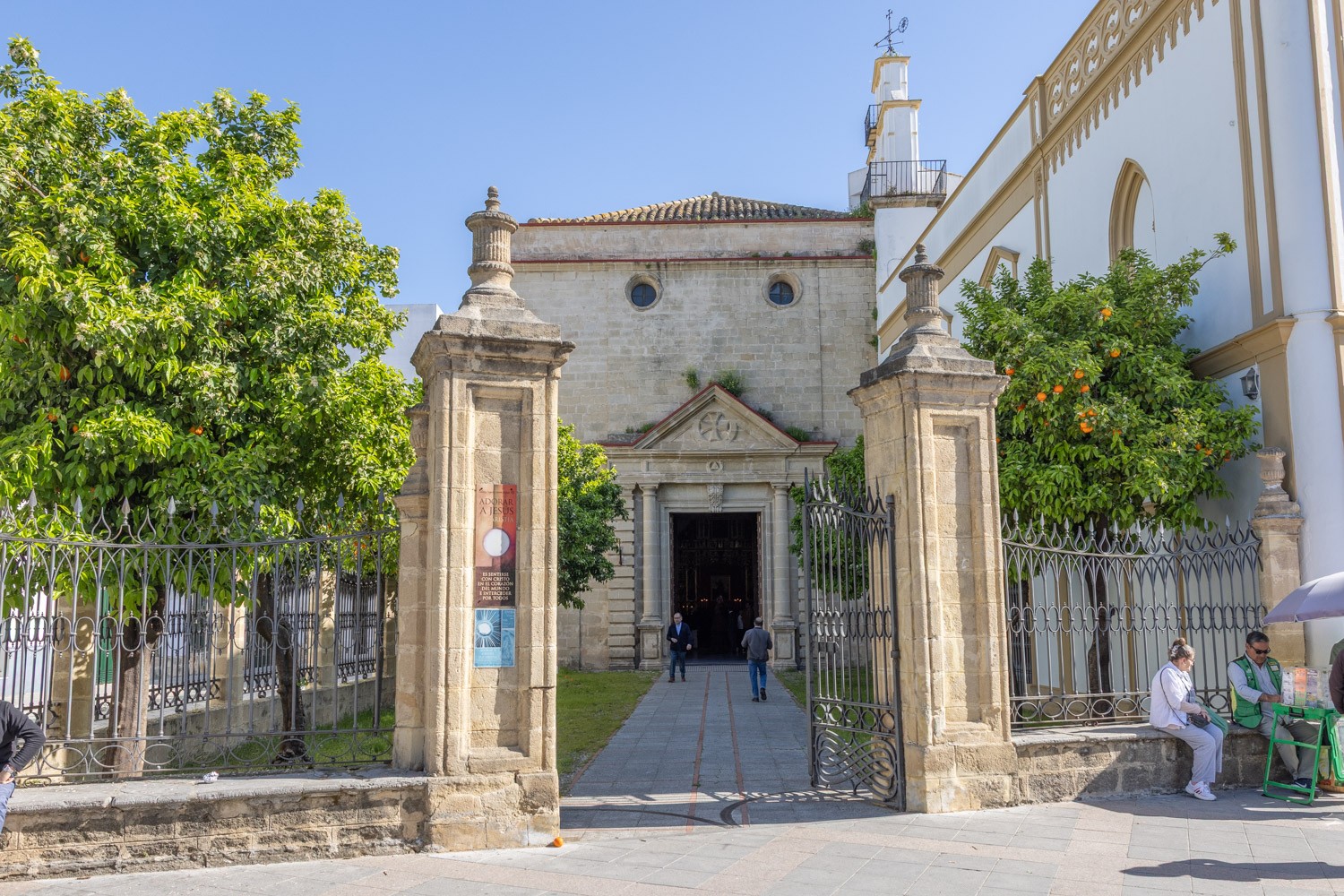
Preparations for Easter in Jerez
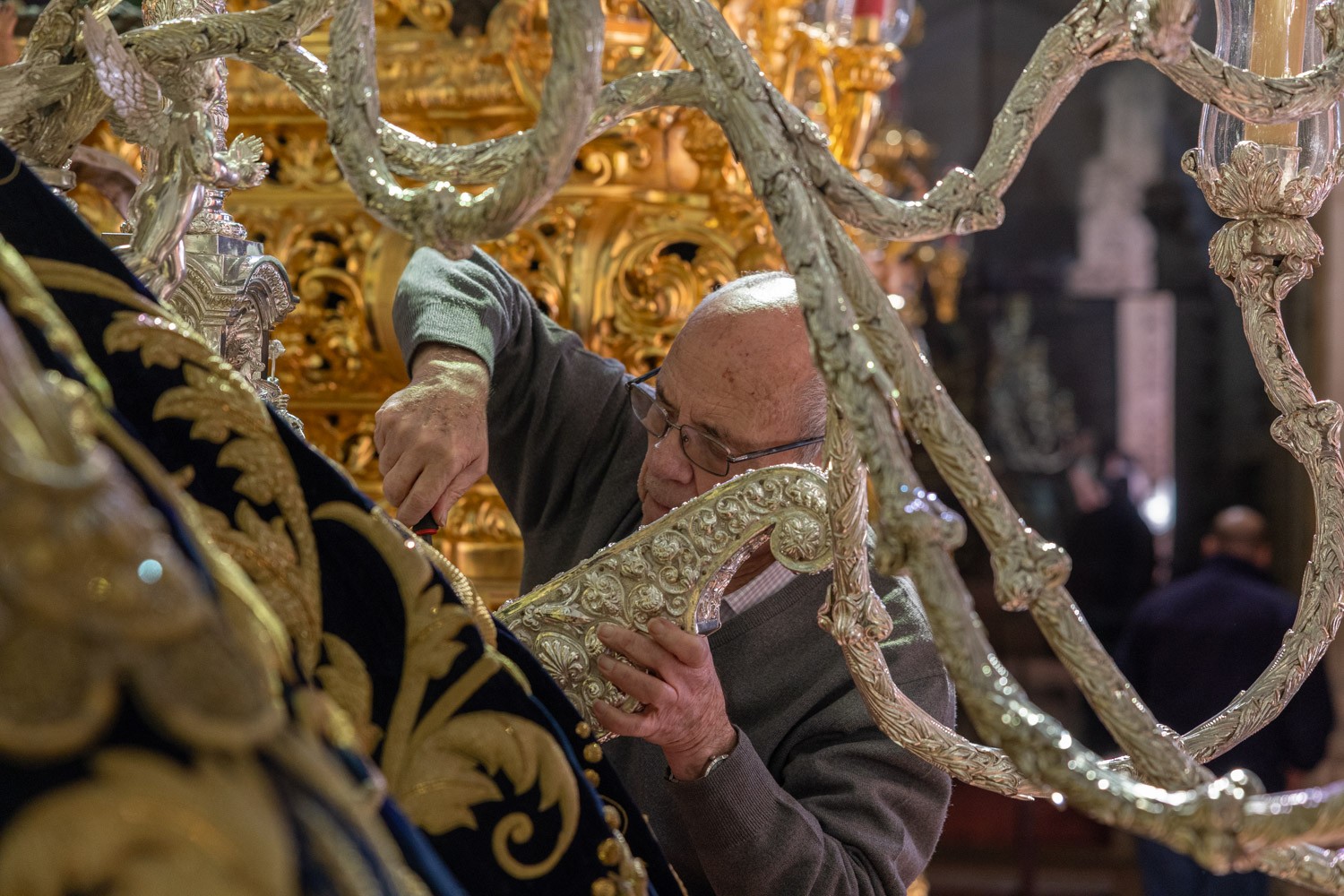
The Pasos are the vast, heavily ornamented floats bearing sculpted images of Christ or the Virgin Mary. They are carried by 30 – 40 people (depending on the size of the float). The more money the brotherhood has, the more decorated the float is. They often use a wooden structure that they cover with gold leaf. It’s lavish, extravagant, and very over the top for the traditional Swedish mind.
The newer the brotherhood, the less gold or silver is on the float. Each brotherhood spends time decorating the pasos, and the churches are open so that you can see some of them. People walk inside and kiss the Virgin Mary. The only time the statue of the Virgin Mary is out of the church is during Semana Santa. If it rains, the processions are canceled right away. The statues are too fragile to be exposed to bad weather.


The Processions: A Moving Experience
Nothing quite prepared us for our first procession. It started with a sound, a distant drum, slow and steady. Then comes the silence. It is respectful, and the silence falls over the crowd as the paso appears. The pasos are carried by a team hidden beneath them. They move slowly through the streets, swaying to the band playing.
Candlelight flickers, and stillness is combined with people cheering on. The best way to describe the procession is with the word hypnotic. Even if we don’t know the full tradition behind it, we can still appreciate the symbolism. We wonder how many people joining the procession are doing it because of religion and how many are here just for the tradition. During holy week, the streets are covered with different processions from the different brotherhoods.

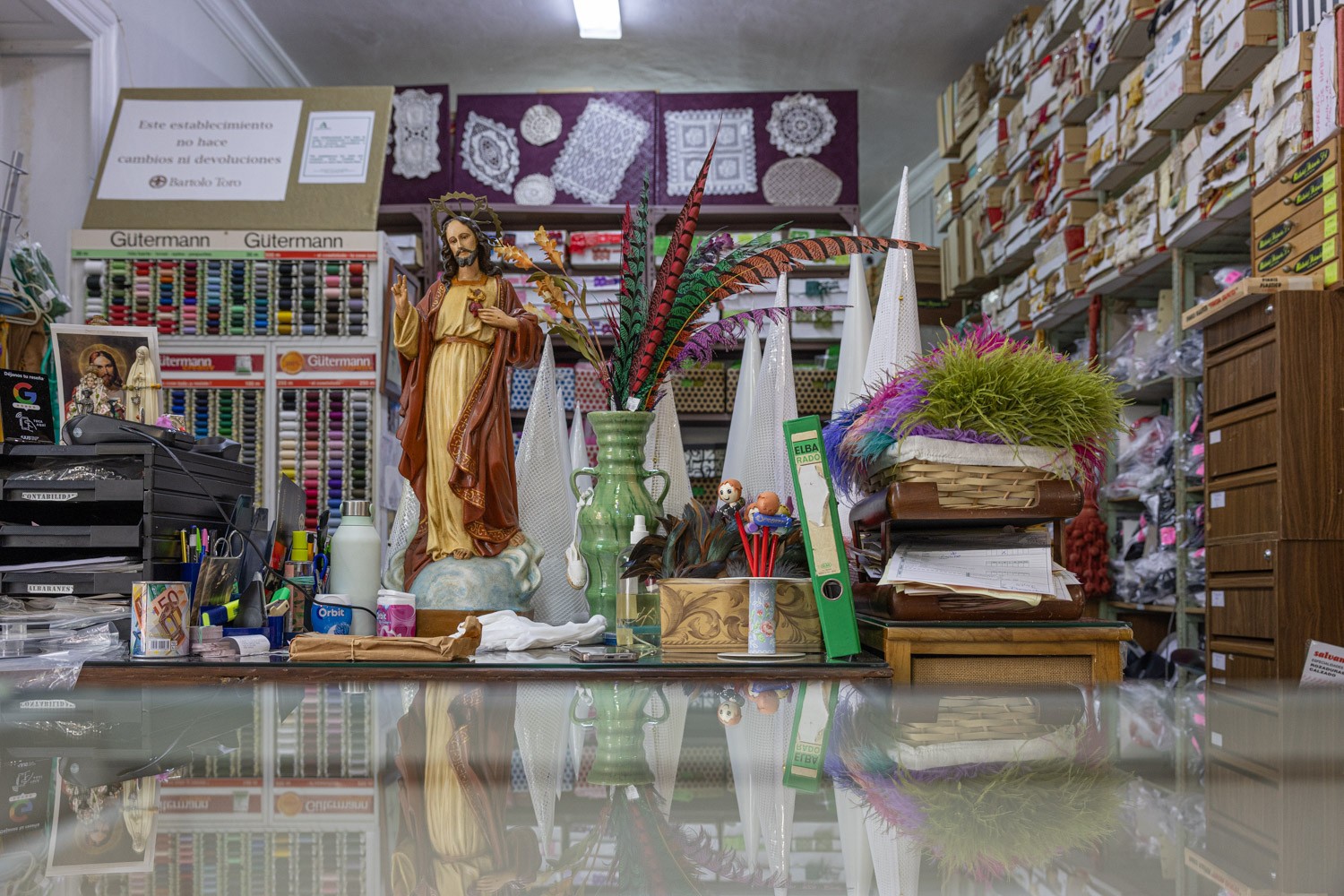

Did you know that there’s a store that only focuses on semana Santa and sell different kinds of things connected to the holy week? Visit Mercería Bartolo Toro to see how much they have to offer!
Fun Facts about Easter in Jerez
There is so much to say about celebrating easter in Jerez. However, since neither Mini nor I is a Christian, we don’t feel comfortable writing about the traditions or meaning. There are a lot of other people who can do it better. But here are some fun facts about the processions that you might not know, but that impressed us:
- Silence can be more powerful than music. While many processions feature dramatic bands, some brotherhoods in Jerez go completely silent. You’ll only hear footsteps, chains, or the creaking of the float—making the atmosphere incredibly intense and emotional.
- Some processions last up to 15 hours. The walk is hard since the floats are heavy (1 000 – 2 000 kilograms). The people carrying them switch places along the way.
- The hooded figures feel wrong to look at first, but once you remember the importance of tradition, it becomes less “scary”. The tall pointed hoods (capirotes) might look strange, but they symbolize penance and anonymity – not anything sinister. The tradition dates back centuries in Spanish religious practice.
- Each brotherhood has its own personality. Every cofradía differs in style—some are austere and serious, others more musical and expressive. Locals often have strong loyalties and can recognize a group instantly just by how they move or sound.
- A lot of people join the procession. Behind every paso, you will see people following the caravan. A lot of them follow the whole procession, and some of them only a part. There is also a possibility to buy a chair and watch the pasos from the same place all week.
Food, Wine, and Local Flavors During Easter in Jerez
Between processions, life continues in the most delicious way. Small bars fill up, conversations happen, and plates start to appear. We found ourselves gravitating toward simple things — tapas shared, something fried and warm, something sweet we couldn’t quite name. And of course, this is Jerez, so a glass of local sherry never felt out of place.
We will write a post about all the food and restaurants. But here are some special things that you should not miss while celebrating easter in Jerez.

Traditional Savory Dishes (No Meat)
- Potaje de Vigilia: A hearty stew of chickpeas, spinach, hard-boiled eggs, and salt cod (bacalao), traditionally eaten on Good Friday.
- Espinacas con Garbanzos: A popular spinach and chickpea dish, often spiced with cumin and garlic.
- Bacalao (Salt Cod): Used in various forms, including fritters (croquetas) or stews.
Iconic Easter Sweets – The Sweeter the better
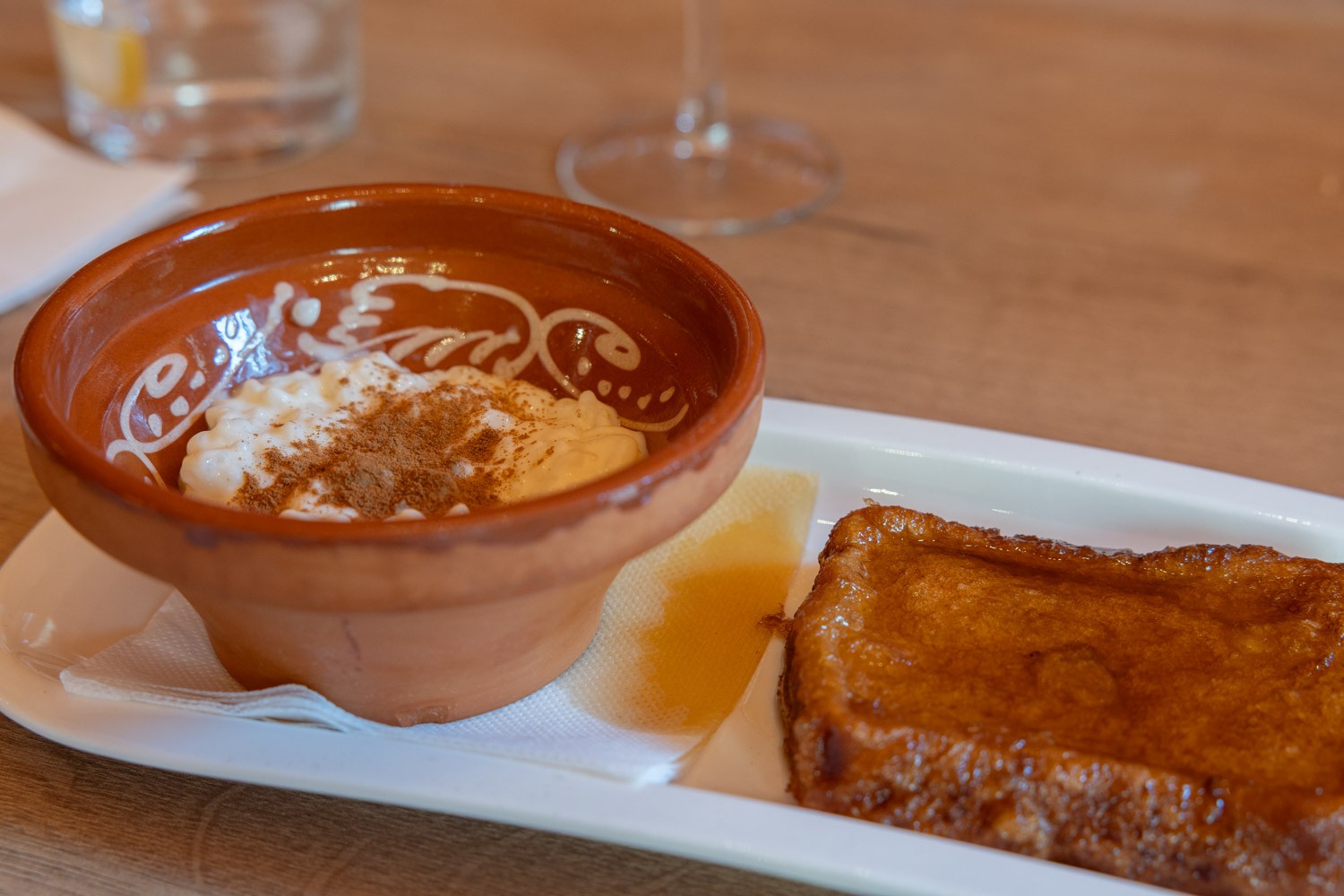
- Torrijas: The most famous Easter treat, similar to French toast, is often soaked in milk or wine, fried, and topped with honey, sugar, and cinnamon.
- Pestiños: Crispy, deep-fried pastry dough often made with anise and orange juice, covered in honey or sugar.
- Rosquillas/Roscos de Semana Santa: Anise-flavored donuts.
- Leche Frita: One of Spain’s most surprising traditional sweets — crispy on the outside, creamy on the inside, and especially popular around Semana Santa.
- Buñuelos de Viento: Small, airy fried donuts.
- Tocino de cielo: Despite the name (“heaven’s bacon”), it’s not savory at all. It’s a rich custard made mainly from egg yolks and sugar.
- Arroz con leche: Unlike many other rice puddings, Spanish arroz con leche almost always includes citrus peel — especially lemon, which cuts through the sweetness and adds freshness.


Tips for Experiencing Easter in Jerez
There is no right or wrong way to experience easter in Jerez. Everyone has their own experience. But our tip is to try not to over-plan. Let yourself get lost and take it day by day. That said, evenings are when most of the major processions take place, so it’s worth being out and about then. Comfortable shoes are essential — you’ll be standing and walking more than you expect.
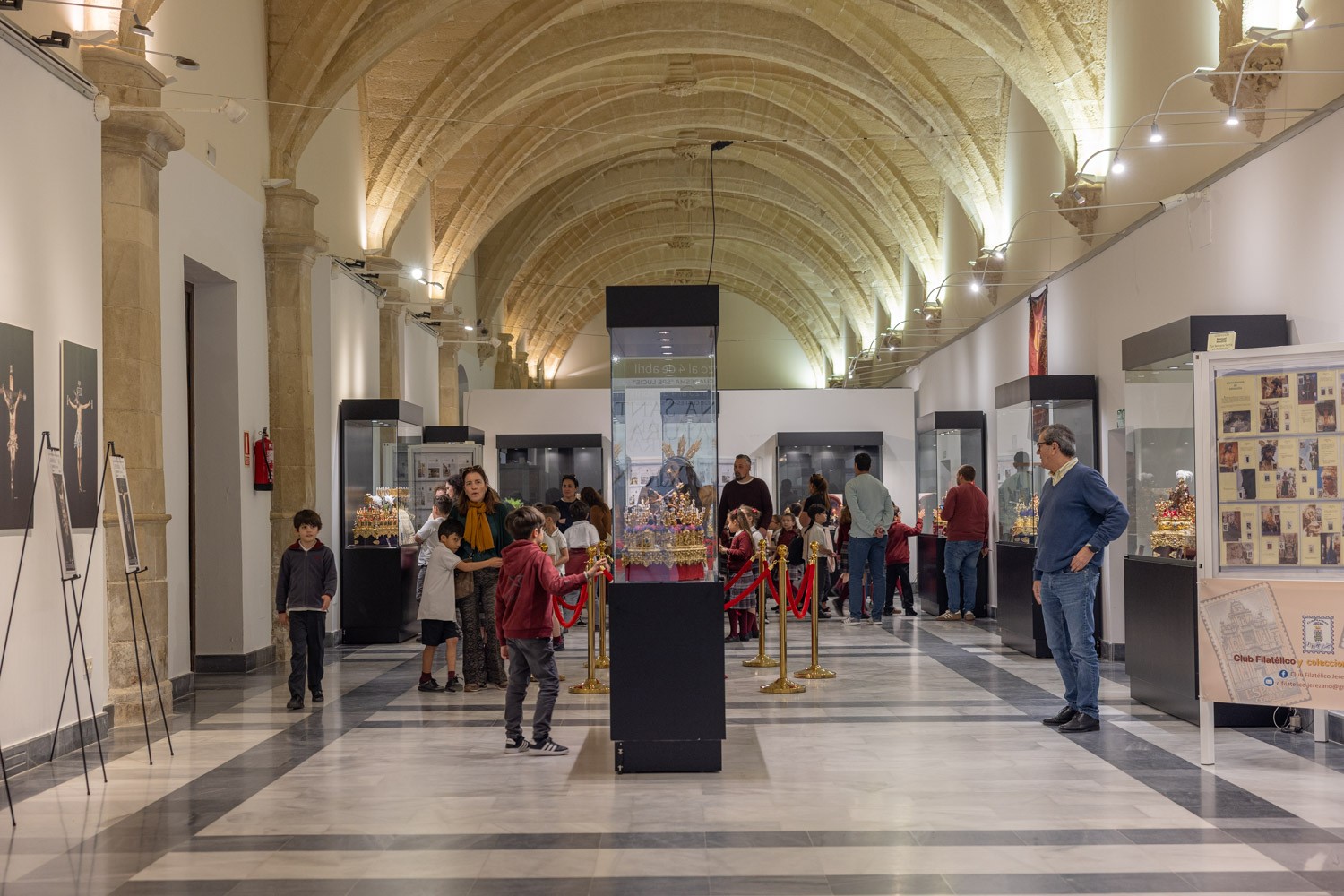
And perhaps most importantly, be patient. Things move slowly, and that’s the point. There is a program with all the processions. Make sure to grab a copy so that you can see what’s on. Also, make sure to visit the temporary exhibition called “Semana Santa en miniatura”. It is a collection of 20 to 30 pasos in miniature. The exhibit is moving but is often found in the Claustros de Santo Domingo (a historic building used for exhibitions).
There isn’t a famous permanent “mini pasos museum” in Jerez like people sometimes expect. this is a temporary exhibition, which pops up especially around Semana Santa.
Is It Worth Visiting Jerez During Easter?
If you want a high-energy, party-like atmosphere, this might not be it. But if you’re drawn to culture, tradition, and experiences that feel genuine and rooted in something deeper, then yes – it’s absolutely worth it. Jerez offers a version of Semana Santa that feels closer, quieter, and in many ways more human.
And let’s not forget about the food and sweets that you can indulge in during the festivities. We recommend that you come to Jerez a few days before the holy week starts and take part in the preparations. Spending Easter in Jerez is something that you will remember for a long, long time.
Final Thoughts: The Feeling You Take Home
What stayed with us wasn’t a single procession or moment, but a feeling. We both have a sense of having witnessed something meaningful, even if we can’t fully explain it. A reminder that travel isn’t always about seeing more, but about feeling something different. Jerez during Easter isn’t loud in the way you might expect—but it stays with you long after you leave. And we have so many memories in our hearts with us back home.
We still don’t fully understand the meaning of processions and why people would torture themselves by walking for hours in the sun and heat. At the same time, we are all about culture and tradition, and easter in Jerez is a part of both!
This trip was a press trip – All thoughts and reflections are our own!








0 Comments